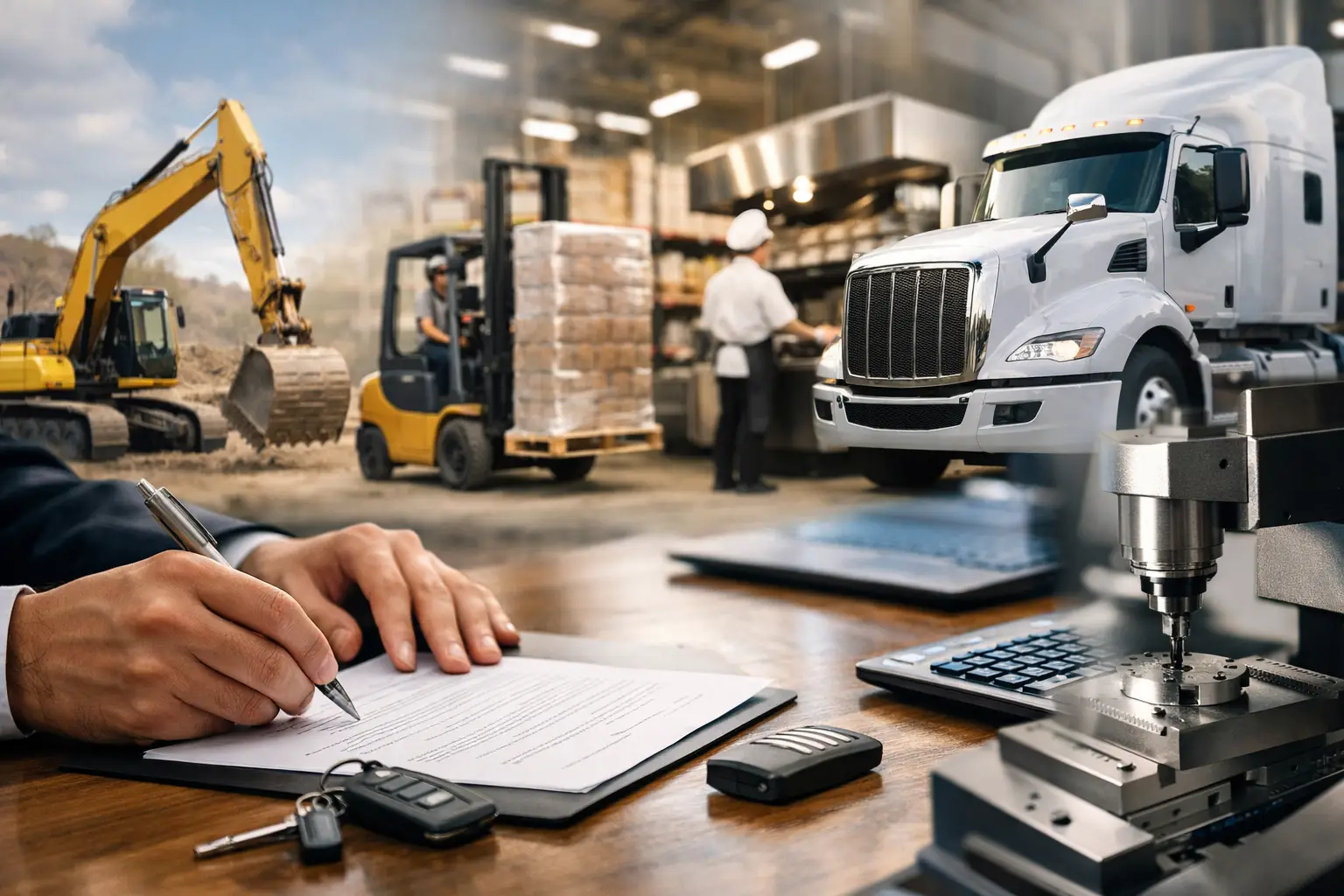
A contractor wins a major job but needs an excavator before the crew can start. A medical practice needs a new imaging system to keep patients from going elsewhere. A trucking company has freight lined up but needs another vehicle to carry it. In each case, equipment financing can turn a business opportunity into an operating asset without requiring the owner to drain cash reserves upfront.
The right financing should do more than cover a purchase price. It should protect working capital, match the useful life of the equipment, and leave room for payroll, inventory, repairs, and the unexpected costs that come with growth. That is why the lowest advertised payment is not always the best deal.
What Equipment Financing Can Cover
Equipment financing is capital used to purchase business assets that help a company operate, produce, transport, serve customers, or expand capacity. The equipment itself often helps secure the financing, which can make this option more accessible than an unsecured business loan.
Eligible assets vary by lender, industry, and condition, but common examples include construction machinery, commercial vehicles, trailers, manufacturing equipment, medical and dental technology, restaurant equipment, agricultural machinery, warehouse systems, computers, and software-related hardware. Financing can also support specialized assets that have a clear business use and reliable resale value.
For many businesses, the practical advantage is simple: use the equipment to generate revenue while making payments over time. Instead of tying up $150,000 in cash for a machine, a company may preserve that money for labor, materials, marketing, or a cushion against slow-paying customers.
How Equipment Financing Works
A lender or financing partner reviews the business, the asset being purchased, and the proposed repayment structure. If approved, funding is typically sent to the equipment vendor or supplier. The business then makes scheduled payments under a loan or lease agreement.
The exact approval process depends on the size of the request, the type and age of the equipment, time in business, annual revenue, and credit profile. Strong credit and established revenue can open the door to longer terms and more competitive pricing. But a lower score does not automatically end the conversation. Many lenders also look at recent bank activity, cash flow, industry experience, the value of the equipment, and how the asset will support repayment.
That matters for business owners who have solid demand but a less-than-perfect personal credit history. Good credit or bad credit, the goal is to find a financing structure that reflects the full business situation rather than one number alone.
Loans, leases, and other structures
With an equipment loan, the business generally owns the asset after the loan is paid off. This often makes sense for equipment the company expects to use for years, such as a truck, CNC machine, or piece of heavy equipment.
A lease may offer lower upfront costs or more flexibility at the end of the term. Depending on the agreement, the business may return the equipment, renew the lease, purchase the asset, or upgrade to newer technology. Leasing can be especially useful for equipment that becomes outdated quickly, including certain medical, technology, and office systems.
In some situations, a company may use a term loan, asset-based financing, or a business line of credit instead. This can make sense when the project includes more than one need. For example, a manufacturer may need to buy a production machine, install it, purchase raw materials, and cover payroll during ramp-up. Equipment financing may cover the asset while another capital product supports the operating needs around it.
The Payment Is Only One Part of the Decision
A monthly payment that looks manageable on paper can still create pressure if it does not align with the business cycle. A landscaping company may need lighter payments during winter. A transportation business may prefer a structure that works with contract revenue. A seasonal agricultural operation may need repayment timed around harvest or sales periods.
Before accepting an offer, review the total financed amount, repayment term, payment frequency, interest rate or factor, down payment, documentation requirements, and end-of-term ownership terms. Ask whether there are prepayment provisions, late-payment charges, personal guarantees, insurance requirements, or restrictions on moving or modifying the equipment.
There are trade-offs. A longer term can reduce the monthly payment and preserve cash flow, but it may increase the total cost of financing. A shorter term can reduce overall interest expense, but the higher payment may limit flexibility during a slow month. The best choice depends on your margin, revenue consistency, the equipment’s useful life, and how quickly the asset should produce income.
When Financing Is a Smart Business Move
Financing is often a strong choice when equipment will directly increase revenue, lower labor costs, improve production speed, or prevent downtime. A delivery company adding a truck to serve a signed route has a clearer repayment path than a company buying an asset without a defined use.
It can also be a practical move when cash is available but better used elsewhere. Keeping reserves on hand can help a business handle supplier delays, customer payment gaps, emergency repairs, or the next opportunity that cannot wait. Cash is not free just because it is in the bank. Using all of it for one asset can leave an otherwise healthy company exposed.
Still, financing is not automatically the right answer. If the equipment is rarely used, has an uncertain resale value, or will not improve revenue or efficiency, taking on a payment may not make sense. Renting may be better for a short-term project. Buying used equipment with cash may be better for a low-cost asset that does not justify financing fees. The decision should follow the business need, not just the availability of funding.
How to Improve Your Chances of Approval
Preparation can speed up the process and improve the quality of available offers. Start with a clear equipment quote or invoice that identifies the vendor, asset description, purchase price, and whether the equipment is new or used. Be ready to explain how the asset will be used and what it will do for the business.
Lenders commonly request recent business bank statements, a completed application, basic business details, and identification. Larger requests may require financial statements, tax returns, debt schedules, or proof of contracts and purchase orders. Providing complete, consistent information upfront helps avoid delays caused by follow-up questions.
It also helps to be realistic about the request. If a company has limited time in business, inconsistent revenue, or challenged credit, a larger down payment, shorter term, or different equipment type may improve the odds. Flexibility is not a weakness. It is often the difference between waiting for capital and putting an income-producing asset to work now.
Why Multiple Lender Options Matter
One lender may focus heavily on personal credit. Another may be more comfortable with strong monthly revenue, valuable collateral, or an experienced operator in a familiar industry. A lender that works well for a medical practice may not be the best fit for a construction company buying used machinery.
That is why comparing financing structures matters. Equipment Business Loans works with more than 75 lending partners and has funded more than $2 billion, helping businesses pursue capital from $50,000 to $10 million. Rather than forcing every borrower into one lending box, a broader network can create options for different credit profiles, asset types, and business goals.
For borrowers with credit scores starting at 550, the focus should be on presenting the strongest complete picture possible: revenue, operating history, equipment value, customer demand, and a clear reason the purchase will move the business forward.
Put the Asset to Work Before the Opportunity Passes
The best equipment purchase is not necessarily the newest or most expensive one. It is the asset that solves a real operating problem and produces a return the business can support. Bring a clear quote, honest financial information, and a practical repayment plan to the financing conversation. With the right structure, equipment can become a source of capacity and revenue instead of a cash-flow obstacle.